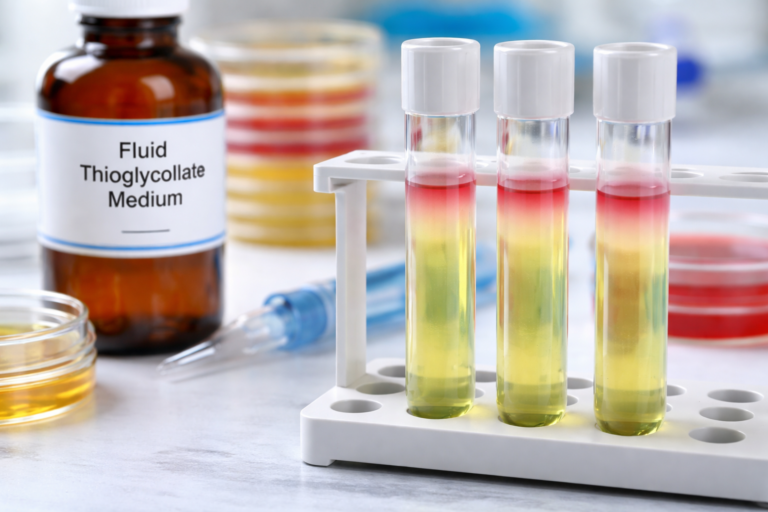
One topic that often creates confusion among freshers and even experienced professionals is microorganisms of concern vs objectionable microorganisms in pharmaceuticals. Although these terms are related, they are not interchangeable and serve different purposes in microbiological risk assessment.
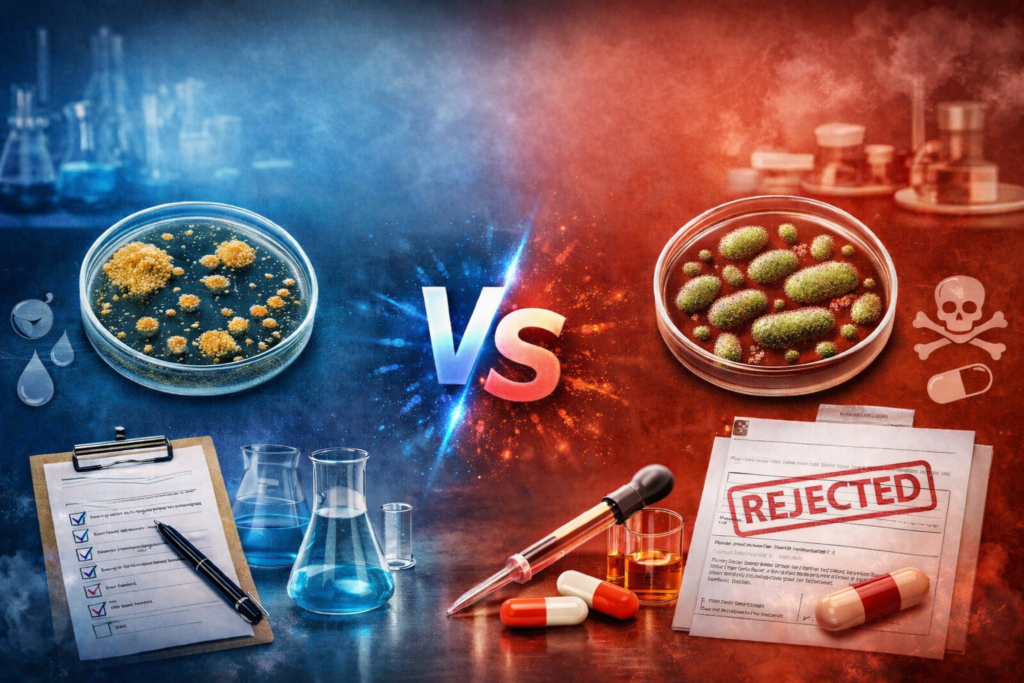
What Are Microorganisms of Concern?
In the pharmaceutical industry, microbial control is a critical quality requirement for both sterile and non-sterile products. Sterile products are expected to be completely free from microorganisms, whereas non-sterile products are permitted to contain microorganisms within defined and acceptable limits.
However, the detection of certain microorganisms, whether in in-process samples, the manufacturing environment, or water systems, immediately raises concern due to their potential risk to product quality and patient safety. Such microorganisms are referred to as microorganisms of concern.
Microorganisms of concern are specific microbes that are considered high-risk for a particular product, process, facility, or patient population. These organisms are identified based on risk assessment, not fixed lists.
Key Characteristics
- Product-specific or process-specific
- Identified through risk analysis
- Can vary from one facility to another
- Often linked to sterility, preservative failure, or patient harm
Examples of Microorganisms of Concern
- Burkholderia cepacia in aqueous and inhalation products
- Pseudomonas aeruginosa in water systems and topical products
- Staphylococcus aureus in skin-contact products
- Ralstonia pickettii in purified water and WFI systems
- Candida albicans in oral and topical formulations
Why They Matter
Even at low counts, microorganisms of concern can:
- Survive preservatives
- Multiply during shelf life
- Cause serious infections, especially in immunocompromised patients
Regulatory agencies expect companies to identify, monitor, and control these organisms proactively.
What Are Objectionable Microorganisms?
Objectionable microorganisms are organisms that are unacceptable in a product because of:
- Their pathogenicity
- Their ability to survive or grow in the product
- Their intended route of administration
- The target patient population
Unlike microorganisms of concern, objectionable organisms are evaluated during routine testing.
Key Characteristics
- Evaluated during finished product testing
- Depend on product use and route of administration
- Defined by pharmacopoeias and regulatory guidance
Examples of Objectionable Microorganisms
- Escherichia coli in oral products
- Salmonella spp. in non-sterile products
- Pseudomonas aeruginosa in ophthalmic and topical products
- Staphylococcus aureus in nasal and skin products
- Clostridium spp. in anaerobic-friendly formulations
Why They Matter
If an objectionable microorganism is detected:
- Reject the product
- Raise a deviation and investigate
- Find the Root cause, and implement CAPA
| Aspect | Microorganisms of Concern | Objectionable Microorganisms |
|---|---|---|
| Basis | Risk assessment | Regulatory & pharmacopoeial limits |
| Scope | Product/process-specific | Product & route-specific |
| Detection | Environmental, water, trend data | Finished product testing |
| Regulatory Expectation | Proactive identification | Mandatory absence |
| Flexibility | Varies by facility | Defined by standards |
Are They the Same or Different?
This is an important point for audits and interviews.
- All objectionable microorganisms can be microorganisms of concern
- But not all microorganisms of concern are objectionable
A microorganism may not be listed as objectionable in pharmacopeia, yet still be considered a microorganism of concern due to:
- Repeated environmental recovery
- Resistance to disinfectants
- History of contamination in similar products
GMP and Regulatory Expectations
US FDA, EMA, and WHO expect companies to:
- Conduct microbial risk assessments
- Justify why certain organisms are considered objectionable or not
- Monitor trends, not just results
- Establish alert and action limits
- Document scientific rationale clearly
Failing to address microorganisms of concern often results in 483 observations or warning letters.
Practical Example
Imagine a purified water system repeatedly showing Burkholderia cepacia:
- It may not be listed as objectionable for all products
- But due to its resistance and history, it becomes a microorganism of concern
- Immediate action is required even if limits are met
This is where understanding the difference becomes critical.
Also, read this article.