As the pharmaceutical industry becomes more competitive than ever, recruiters no longer rely only on resumes. They search for candidates on LinkedIn, evaluate their profiles, and shortlist them even before a job application reaches their inbox. If your LinkedIn profile does not clearly reflect your expertise, you may lose opportunities that actually match your skills.
Many pharma professionals create a profile and leave it incomplete. Others treat LinkedIn like a digital resume. Both approaches limit your visibility. You need to treat your profile as a professional brand page that communicates your value.
Let us understand how you can build a powerful LinkedIn profile that attracts recruiters, hiring managers, and industry connections.
Create a Strong First Impression with Your Profile Photo
Your profile photo acts as your first impression. A clear, professional image builds trust immediately. You should use a well-lit photo where you wear formal or semi-formal attire. Avoid selfies, casual backgrounds, photos at tourist spots, or group photos. Your face should remain clearly visible, and your expression should look confident and approachable.
Headline Speaks Your Value
Most professionals make a common mistake. They only mention their job title in the headline. That approach wastes valuable space.
Your headline should communicate what you do, your expertise, and your value. For example, instead of writing “Microbiologist,” you can write something like “QC Microbiologist | Environmental Monitoring | GMP Compliance | Sterility Assurance.”
This approach helps recruiters understand your specialization in seconds. It also improves your chances of appearing in search results.
The ‘About’ Section
The ‘About’ section gives you the opportunity to tell your story. You should not write it like a resume summary. Instead, write it like a conversation.
Start with your background in the pharmaceutical field. Explain your core expertise, such as microbiology, quality assurance, validation, or production. Then describe your key skills and achievements. You should also highlight your understanding of GMP, regulatory guidelines, and industry practices.
End this section by clearly stating what you seek. If you want job opportunities, collaborations, or networking, say it directly.
When you write in a simple and human tone, readers stay engaged and remember you.
Showcase Your Experience with Impact
List your job roles along with your contributions. You should describe what you actually did in each role. Explain your responsibilities and also highlight your impact. For example, mention how you handled deviations, improved processes, supported audits, or ensured compliance.
Use real-world tasks like environmental monitoring, media preparation, documentation practices, or validation activities. When you show practical exposure, recruiters see you as job-ready.
Highlight Skills That Match Industry Demand
LinkedIn allows you to add skills, but you need to choose them wisely. Focus on skills that match pharmaceutical industry requirements.
Skills like Good Manufacturing Practices, Environmental Monitoring, Sterility Testing, Documentation, CAPA, and Quality Control attract recruiters. When you align your skills with job roles, your profile becomes searchable and relevant.
You should also keep updating your skills as you grow in your career.
Add Certifications and Courses
Certifications strengthen your credibility. If you completed courses related to GMP, microbiology, validation, or regulatory affairs, you should display them clearly.
Online platforms offer many pharma-related courses and adding them shows your willingness to learn.
Recruiters often prefer candidates who continuously upgrade their knowledge.
Build a Strong Network in the Pharma Industry
LinkedIn works best when you stay active. You should connect with professionals from your field, including colleagues, seniors, and industry experts.
When you build a relevant network, your visibility increases. Your profile reaches more people, and you stay updated with industry trends.
Do not send random connection requests. Personalize your message and mention why you want to connect. This will improve acceptance rates.
Share Content to Build Authority
You do not need to remain silent on LinkedIn. You can share your experiences, or simple learnings from your daily work.
For example, you can post about GMP practices, audit experiences, environmental monitoring concepts, or documentation importance. When you share valuable content, people start recognizing you as a knowledgeable professional.
Consistency matters more than perfection. Even one post per week can build your authority over time.
Request Recommendations
Recommendations act as proof of your work. When colleagues or managers write about your skills and contributions, your profile gains credibility.
You should request recommendations from people who worked closely with you.
A genuine recommendation builds trust faster than any self-written description.
Keep Your Profile Updated
Your LinkedIn profile should always reflect your current status. Whenever you learn a new skill, complete a course, or change a role, update your profile immediately.
An updated profile shows that you stay active and serious about your career growth.
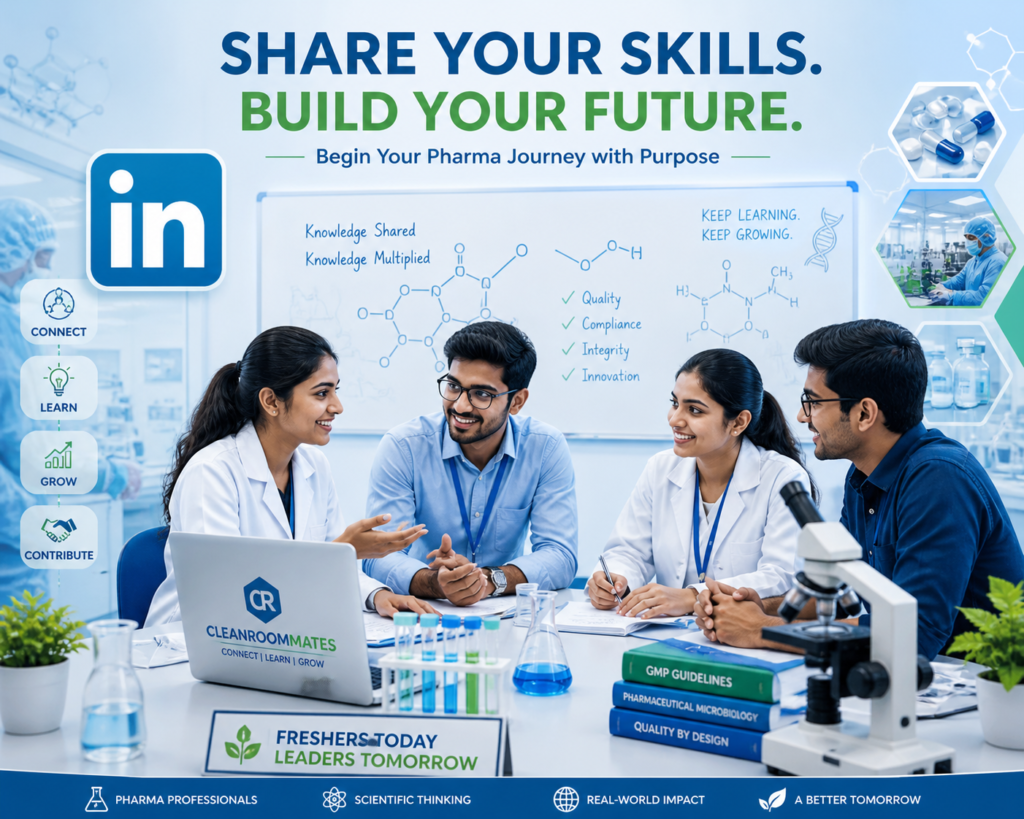
If you build your profile with intention and keep improving it regularly, recruiters will start finding you instead of the other way around.
Three Steps to Find a Job in the Pharmaceutical Industry as a Fresher