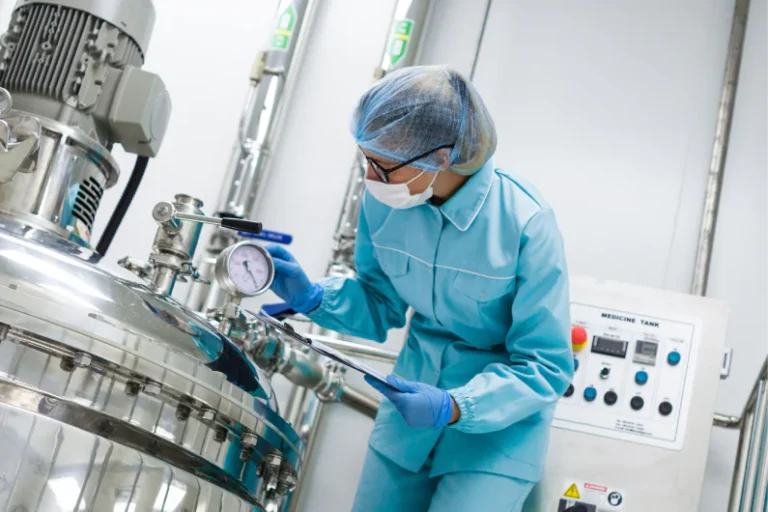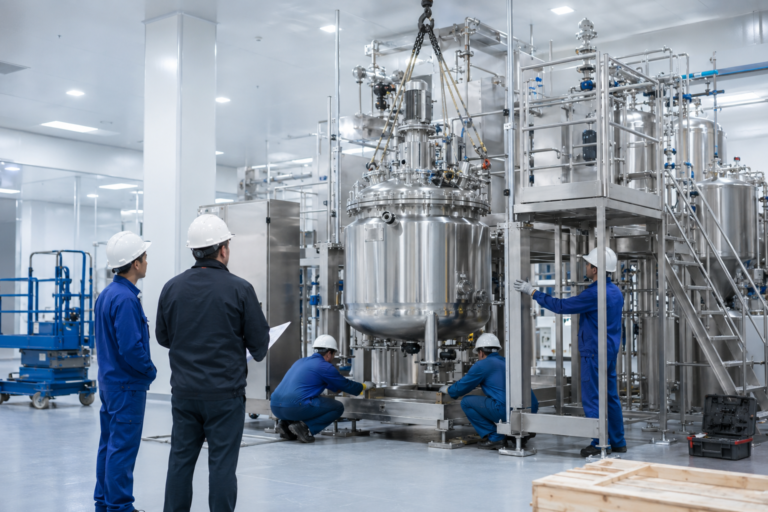
Performance Qualification (PQ) represents the final stage of equipment qualification in pharmaceuticals. After completing Installation Qualification (IQ), and Operational Qualification (OQ), organizations perform PQ to demonstrate that equipment consistently performs as intended under actual operating conditions.
Regulatory agencies expect pharmaceutical manufacturers to prove that equipment can repeatedly produce products that meet predefined quality requirements. PQ provides documented evidence that equipment performs effectively during routine production activities and supports the overall validation lifecycle.

What is Performance Qualification (PQ)?
Performance Qualification is a documented verification process that demonstrates that equipment, systems, utilities, or facilities consistently perform according to predefined specifications under normal operating conditions.
During PQ, the qualification team operates the equipment using approved procedures, trained personnel, routine materials, and actual operation parameters. The team evaluates performance over multiple runs to confirm consistent and reproducible results.
PQ focuses on real-world performance rather than theoretical capabilities. While OQ demonstrates that equipment functions within specified operating ranges, PQ demonstrates that the equipment can consistently deliver acceptable results during routine production.
Relationship Between IQ, OQ, and PQ
Qualification follows a logical sequence.
Installation Qualification verifies that the equipment installation complies with approved specifications and engineering requirements.
Operational Qualification confirms that the equipment operates correctly throughout its defined operating ranges.
Performance Qualification verifies that the equipment consistently performs as intended during routine use.
Organizations should complete and approve IQ and OQ before initiating PQ activities.
Prerequisites Before Starting PQ
The qualification team should complete several activities before initiating PQ.
The team should approve the User Requirement Specification, Design Qualification, Installation Qualification, and Operational Qualification documents.
Standard Operating Procedures should receive approval before PQ execution.
Personnel should complete training on equipment operation and qualification procedures.
The maintenance department should establish preventive maintenance procedures.
Calibration activities should remain current and traceable.
The team should define acceptance criteria and establish a documented protocol.
The organization should resolve all critical deviations identified during IQ and OQ before beginning PQ.
Preparation of the PQ Protocol
The PQ protocol needs to be prepared, reviewed, and approved before the execution of the PQ.
A well-designed protocol provides clear instructions for execution.
The protocol must include document identification details, objective, scope, responsibilities, equipment description, qualification methodology, acceptance criteria, sampling requirements, test procedures, deviation handling procedures, data recording formats, and approval sections.
The protocol should clearly define how many qualification runs the team will perform and which parameters they will evaluate.
Risk Assessment Before PQ
A quality risk assessment is always recommended before performing PQ activities for equipment used for critical operations.
The qualification team identifies critical process parameters and critical quality attributes that may affect product quality.
The team evaluates potential risks associated with equipment performance and determines the parameters that require monitoring during PQ.
Risk assessment helps focus qualification efforts on areas that present the greatest impact on patient safety and product quality.
Many organizations use Failure Mode and Effects Analysis (FMEA) to support qualification planning.
Execution of Performance Qualification
The team performs PQ according to the approved protocol.
Operators run the equipment using routine operating procedures. The qualification team records all critical process parameters during execution.
The team uses production-scale materials whenever possible. They monitor equipment performance under normal operating conditions and document all observations.
Many organizations perform three consecutive successful qualification runs to demonstrate consistency. However, the actual number of runs should depend on risk assessment, process complexity, and regulatory expectations.
The team evaluates each run against predefined acceptance criteria.
Parameters Evaluated During PQ
The specific parameters depend on the equipment and process.
For manufacturing equipment, the team may evaluate processing time, mixing efficiency, temperature control, pressure control, yield, throughput, and product quality attributes.
For HVAC systems, the team may evaluate temperature, humidity, differential pressure, airflow patterns, recovery time, and particle levels.
For purified water systems, the team may evaluate conductivity, Total Organic Carbon, microbial counts, flow rates, and system performance over extended periods.
For laboratory equipment, the team may evaluate accuracy, precision, reproducibility, reliability, and consistency of analytical results.
Example of PQ for an Autoclave
Consider an autoclave used for sterilization.
During PQ, the team loads the autoclave using routine production configurations. They place biological indicators and temperature sensors at worst-case locations within the chamber.
The team performs multiple sterilization cycles according to approved operating parameters.
They evaluate temperature distribution, heat penetration, biological indicator destruction, cycle consistency, and sterilization effectiveness.
Successful completion demonstrates that the autoclave consistently achieves the required sterility assurance level during routine operation.
Example of PQ for an HVAC System
For an HVAC system supporting a cleanroom, PQ verifies environmental performance under actual operating conditions.
The qualification team evaluates temperature, relative humidity, differential pressure, airflow patterns, air changes per hour, particle counts, and microbial monitoring results.
The team performs air monitoring at rest and dynamic conditions.
Handling Deviations During PQ
Deviations may occur during qualification activities.
The team should document every deviation and conduct a thorough investigation.
The investigation should determine root cause, assess product impact, evaluate qualification impact, and identify corrective actions.
The team should justify any decision to repeat qualification runs.
Management should review and approve deviation reports before final qualification approval.
Acceptance Criteria
Acceptance criteria define the conditions required for successful qualification.
The team should establish objective, measurable, and scientifically justified criteria before execution.
Acceptance criteria may include operational limits, environmental requirements, process performance targets, microbiological limits, product quality specifications, and equipment reliability expectations.
The qualification team should avoid modifying acceptance criteria after execution begins.
PQ Report Preparation
After completing qualification activities, the team prepares a complete PQ report.
The report summarizes all qualification activities and conclusions.
The report includes protocol reference, equipment description, execution summary, test results, statistical evaluations, deviations, investigations, corrective actions, conclusion, and approval signatures.
The report should clearly state whether the equipment meets all predefined acceptance criteria.
Approval and Release for Routine Use
Quality Assurance reviews the PQ report before granting final approval.
After approval, the organization can release the equipment for routine production use.
The qualification package becomes part of the permanent validation documentation and remains available for regulatory inspection.
Requalification Requirements
Qualification does not end after initial approval.
Organizations should establish periodic review programs to ensure continued compliance.
Major equipment modifications, software changes, relocation, capacity changes, extended shutdowns, recurring failures, or significant maintenance activities may trigger requalification requirements.
A risk-based approach helps determine the extent of requalification activities.
Common Challenges During PQ
Many organizations face challenges during PQ execution.
Poor protocol design often leads to unclear acceptance criteria and incomplete testing.
Inadequate operator training may produce inconsistent results.
Insufficient risk assessment can result in unnecessary testing or missed critical parameters.
Poor documentation practices can create compliance issues during regulatory inspections.
A well-planned qualification strategy helps minimize these challenges.
Best Practices for Successful PQ
Organizations should develop scientifically sound protocols, establish clear acceptance criteria, maintain strong documentation practices, train personnel effectively, apply risk management principles, investigate deviations thoroughly, and maintain close collaboration between Engineering, Production, Validation, Microbiology, and Quality Assurance departments.
Organizations that follow a structured qualification lifecycle, supported by robust protocols, effective risk assessment, accurate documentation, and comprehensive review processes, can establish strong confidence in the long-term reliability and performance of their equipment and systems.