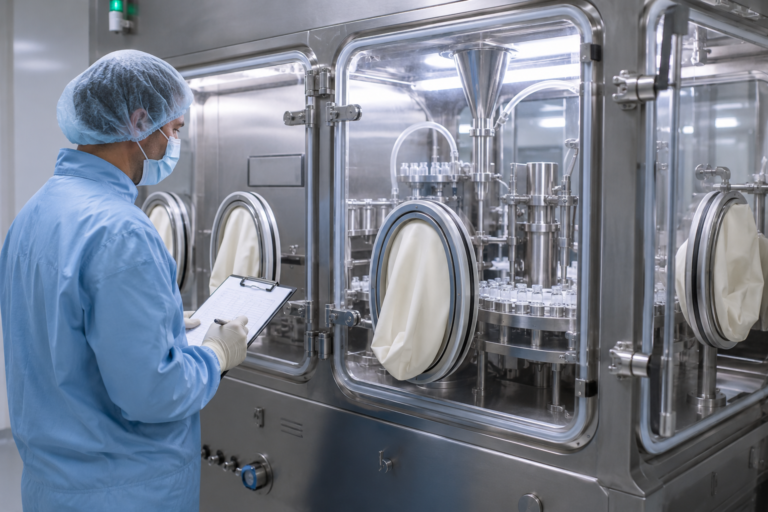
The risk associated with pharmaceutical products does not stop once manufacturing ends. In reality, a new phase of risk begins the moment the product leaves the facility.
Temperature fluctuations, humidity exposure, vibrations, and transit delays can all compromise product quality.
Transport validation ensures that products maintain their identity, strength, quality, and purity throughout distribution. It connects manufacturing control with real-world logistics, making it a critical part of the pharmaceutical quality system.
For professionals working in quality assurance, microbiology, or supply chain, understanding transport validation is no longer optional. Regulatory agencies expect strong scientific evidence that distribution conditions do not affect product integrity.
What is Transport Validation?
Transport validation is a documented process that demonstrates a pharmaceutical product remains within predefined environmental conditions during transportation.
It verifies that the chosen packaging system and transport route protect the product under worst-case conditions. This includes temperature excursions, handling stress, and environmental exposure.
The goal is to ensure that what reaches the patient is exactly what was released from the manufacturing site.
Why Transport Validation is Critical
Pharmaceutical products, especially biologics, vaccines, and temperature-sensitive drugs, can degrade quickly if exposed to unsuitable conditions. Even small deviations can lead to reduced efficacy or complete product failure.
Regulatory bodies expect companies to validate their distribution systems as part of Good Distribution Practices. Inspectors often review transport validation data during audits, especially for cold chain products.
Transport validation also protects the company from financial losses, product recalls, and reputational damage.
A well-designed validation program reduces uncertainty and builds confidence in the supply chain.
Regulatory Expectations
Global regulatory agencies emphasize transport validation as part of quality systems.
Guidelines from organizations such as the WHO, EU GDP, and US FDA require companies to demonstrate control over transportation conditions. These expectations align with principles of Good Manufacturing Practices and Good Distribution Practices.
Authorities expect documented evidence showing that products remain within acceptable limits throughout transit. They also expect risk-based approaches and periodic review of transport systems.
Key Elements of Transport Validation
Transport validation begins with understanding the product and its sensitivity.
A product that requires storage at 2–8°C demands a different approach compared to a product stable at room temperature.
Risk assessment plays a major role in designing the validation study. Factors such as transport duration, mode of transport, climate zones, and seasonal variations must be considered.
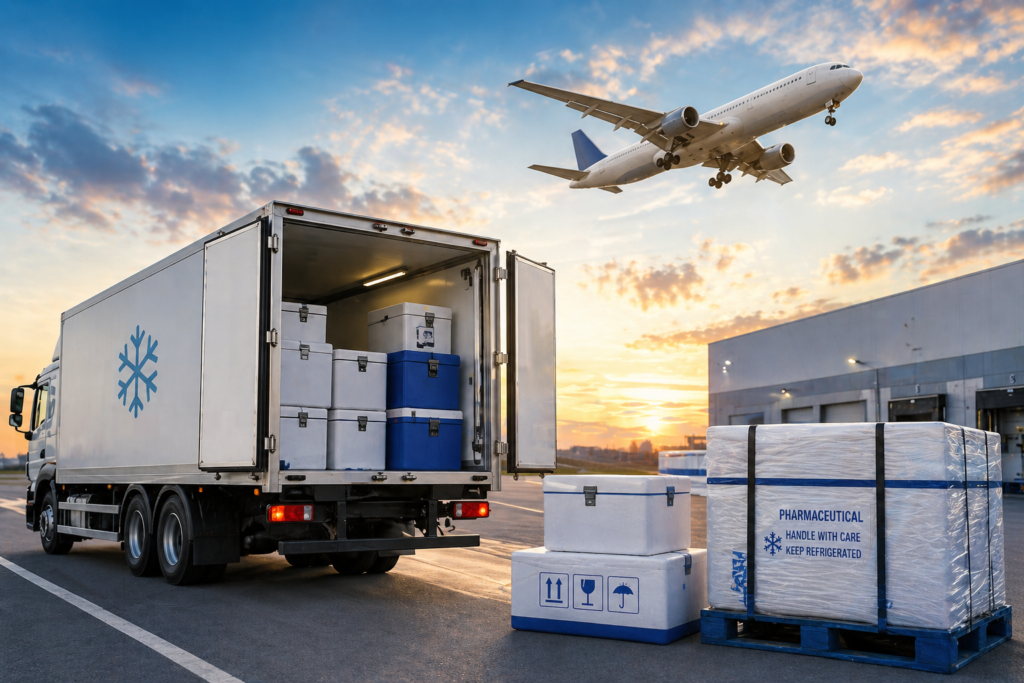
Packaging qualification follows next. The packaging system must protect the product against external conditions. This includes insulated containers, gel packs, phase change materials, or active temperature-controlled systems.
Temperature mapping forms the core of validation. Data loggers are placed inside the shipment to monitor temperature distribution throughout the journey. These studies simulate worst-case conditions to ensure robustness.
Route qualification ensures that actual transportation routes meet the required conditions. Real shipments are monitored to confirm that the system performs as expected in real-world scenarios.
Types of Transport Validation Studies
Different studies support transport validation depending on product risk and distribution complexity.
Operational qualification verifies that the packaging system performs as expected under controlled test conditions. It challenges the system with temperature extremes to assess its limits.
Performance qualification confirms that the system works under actual shipping conditions. It involves real shipments across defined routes.
Seasonal validation studies address variations in environmental conditions. Summer and winter profiles often differ significantly, and validation must cover both extremes.
Challenges in Transport Validation
Transport validation presents unique challenges because it involves external variables that are difficult to control.
Weather conditions can change unexpectedly. Transit delays can extend exposure times. Handling practices may vary across logistics partners.
Companies must design validation studies that account for these uncertainties. They must focus on worst-case scenarios rather than average conditions.
Another common challenge is data interpretation. Temperature excursions do not always mean product failure. Scientific justification and stability data must support any conclusions.
Role of Microbiology in Transport Validation
Microbiology plays an important role, especially for non-sterile and sterile products.
Temperature and humidity fluctuations can promote microbial growth in certain products. Transport validation must ensure that conditions do not create an environment favorable for contamination.
For products like purified water systems, bulk solutions, or microbiologically sensitive formulations, transport conditions must align with microbial control strategies.
Trending environmental data and understanding microbial risks can strengthen the validation program.
Documentation and Data Integrity
Transport validation requires strong documentation practices.
Protocols must clearly define objectives, acceptance criteria, and study design. Reports must include complete data analysis, deviations, and conclusions.
Data loggers must be calibrated and traceable. Electronic data must comply with data integrity principles, ensuring accuracy and reliability.
Auditors often focus on documentation quality.
Best Practices for Effective Transport Validation
A successful transport validation program starts with a risk-based approach. It focuses on product characteristics, distribution routes, and environmental challenges.
Companies should collaborate closely with logistics partners. Clear communication ensures proper handling during transit.
Periodic review of validation data is also important. Changes in routes, packaging, or climate conditions may require revalidation.
Continuous monitoring systems can further enhance control. Real-time tracking allows quick response to temperature excursions.
Transport validation ensures that pharmaceutical products remain safe and effective throughout their journey from manufacturer to patient.
It bridges the gap between controlled manufacturing environments and unpredictable real-world conditions. A strong validation program reduces risks, ensures regulatory compliance, and protects patient safety.