
Sterility testing plays a critical role in pharmaceutical microbiology. Manufacturers must perform this test before releasing sterile products such as injectables, ophthalmic preparations, and certain inhalation products. Many professionals consider it the final confirmation that a product is free from microorganisms.
However, a deeper look at pharmaceutical microbiology reveals a surprising truth. Sterility testing cannot guarantee sterility. The test only examines a small sample of the batch and reports whether microorganisms grow under the test conditions. Regulatory authorities and pharmacopoeias have acknowledged this limitation for decades.
This raises an important question: Is the sterility test truly reliable?
To answer this, we must understand the deficiencies and inherent limitations of sterility testing.
The Purpose of Sterility Testing
Sterility testing attempts to detect viable microorganisms in sterile pharmaceutical products. Laboratories usually perform the test using two culture media: Fluid Thioglycollate Medium (FTM) and Soybean Casein Digest Medium (SCDM). These media support the growth of a wide range of bacteria and fungi during a 14-day incubation period.
If no microbial growth appears during incubation, the batch passes the sterility test.
This method seems straightforward. Yet passing the sterility test does not prove that the entire batch is sterile. It only confirms that the specific samples tested did not show microbial growth under the defined conditions.
The Statistical Limitation of Sterility Testing
The biggest deficiency of sterility testing lies in its sampling limitation.
Pharmacopoeias require testing only a small number of units from a batch. For large batches containing thousands of containers, the sterility test may involve testing only around 20-40 units.
Consider a simple example. A batch contains 100,000 vials. The laboratory tests only 20 vials. This means the sterility test evaluates just 0.02% of the entire batch. Even if a few contaminated units exist in the batch, they could escape being sampled.
Because of this limitation, sterility testing can reliably detect only gross contamination. Low-level contamination can easily escape detection.
For this reason, pharmaceutical microbiologists often say:
“Sterility cannot be proven by testing.”
Non-Uniform Distribution of Contamination
Microbial contamination may not spread evenly throughout a batch. Contamination events usually occur during specific moments in manufacturing, such as equipment interventions, filling interruptions, or operator errors.
If contamination occurs at one point in the filling process, only a small portion of the batch may contain microorganisms. When the laboratory randomly selects samples, the contaminated units may not be included in the tested set.
This uneven distribution further reduces the reliability of sterility testing.
Even a contaminated batch can sometimes pass the sterility test if the sampled units happen to be clean.
Possibility of False Negative Results
A false negative result occurs when contaminated samples fail to show microbial growth during testing.
Several factors can cause this situation. Some microorganisms grow very slowly and may not multiply within the incubation period. Certain organisms may remain injured due to sterilization stress and require specific recovery conditions. The product formulation itself may also inhibit microbial growth.
When such conditions occur, microorganisms remain present in the product but fail to grow in the test medium. The sterility test then reports a negative result even though contamination exists.
Even after proper method validation, false negatives may still occur because sterility testing depends on microbial growth under defined culture conditions. Some microorganisms may remain in a viable but non-culturable state or may not grow in standard media such as Fluid Thioglycollate Medium and Soybean Casein Digest Medium used in pharmacopeial sterility tests.
This limitation makes sterility testing an imperfect detection tool.
Risk of False Positive Results
Sterility testing also faces the opposite problem: false positives.
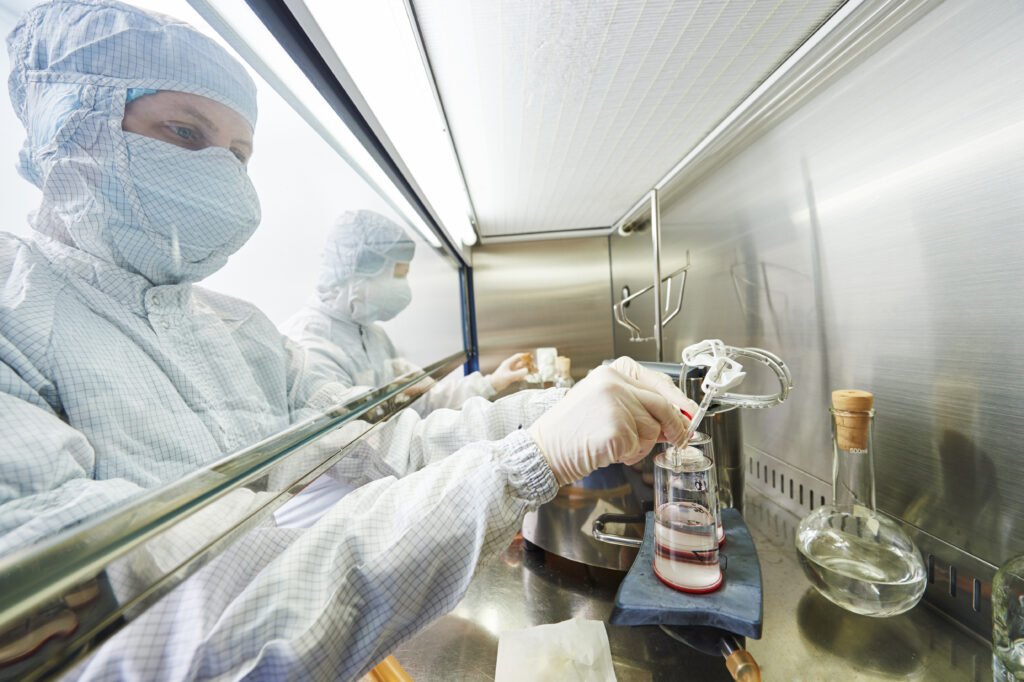
The test procedure requires manual handling of samples, culture media, and equipment under aseptic conditions. Operators perform the work inside laminar airflow cabinets or isolators.
Despite strict procedures, microorganisms from the environment or personnel can occasionally enter the test system.
Human operators themselves carry billions of microorganisms on their skin and in their respiratory tract. Even with sterile gowns and gloves, eliminating all sources of contamination is sometimes impossible.
If contamination enters during testing, the culture medium shows growth even though the product itself may be sterile.
False positives often trigger lengthy investigations, batch rejection, and regulatory scrutiny.
Sterility Testing Cannot Demonstrate Sterility Assurance Level
Sterilization processes aim to achieve a Sterility Assurance Level (SAL) of 10⁻⁶, which means the probability of a non-sterile unit is less than one in one million.
Sterility testing cannot practically verify such a level. Demonstrating this probability through testing would require examining millions of samples, which is impossible in routine pharmaceutical operations.
Therefore, the industry relies on validated sterilization processes rather than finished product testing to achieve sterility assurance.
Why Regulators Still Require Sterility Testing
Despite these limitations, regulatory agencies still require sterility testing for many sterile pharmaceutical products.
The reason lies in its confirmatory value.
Sterility testing acts as a final check that may detect major failures in the manufacturing process. If a batch shows microbial growth, it signals a serious problem in sterilization, aseptic processing, or contamination control.
However, regulators never treat sterility testing as the sole proof of sterility. Instead, they view it as one element within a larger sterility assurance strategy.
The Real Assurance of Sterility?
True sterility assurance comes from a well-designed and well-controlled manufacturing process.
Pharmaceutical companies must establish validated sterilization cycles, controlled cleanroom environments, trained personnel, and comprehensive environmental monitoring programs.
Process validation, media fill simulations, equipment qualification, and contamination control strategies collectively ensure product sterility.
When these systems function correctly, the sterility test becomes a confirmation step rather than the primary assurance mechanism.
This approach explains why some sterilized products may be released via parametric release, in which manufacturers rely on validated sterilization parameters rather than sterility testing.
For pharmaceutical microbiologists, the key lesson is simple: sterility is built into the process, not proven by the test.