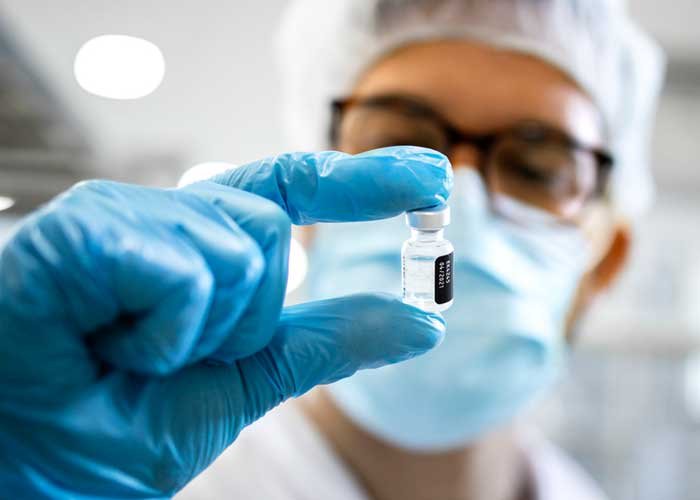
Sterile pharmaceutical products demand more than just a successful sterilization cycle. They require a holistic system of controls that consistently protects the product from contamination, from raw materials to final release. This broader philosophy is known as sterility assurance.
In pharmaceutical manufacturing, sterility assurance and sterility assurance level (SAL) often get used interchangeably. However, this creates confusion. Understanding the distinction between these two concepts is essential for microbiologists, quality professionals, and regulators.

What Is Sterility Assurance?
Sterility assurance is not a single test, number, or validation study. Instead, it represents a philosophy embedded within Good Manufacturing Practices (GMP).
The term combines two ideas:
- Sterility – the condition of being free from viable microorganisms
- Assurance – a justified confidence based on evidence and controls
Together, sterility assurance refers to the confidence that a product remains sterile throughout its entire manufacturing lifecycle.
This lifecycle includes:
- Control of incoming raw materials
- Facility and cleanroom design
- Environmental monitoring
- Personnel qualification and aseptic behavior
- Equipment cleaning and sterilization
- Process validation
- Container-closure integrity
- Storage and distribution controls
Sterility assurance, therefore, forms a core part of the pharmaceutical quality assurance system, not just the microbiology laboratory.
Sterility Assurance Is Not the Same as SAL
A common mistake in pharmaceutical discussions is treating sterility assurance and SAL as identical. They are not.
- Sterility assurance is a qualitative, system-based concept
- SAL is a quantitative, probability-based measure
Sterility assurance does not mean relying on one number or one test to say a product is sterile. No single process or test can prove that every microorganism is gone, because tests check only a few samples and sterilization works on probability, not certainty. Instead, sterility assurance comes from many protections working together—clean facilities, trained people, controlled processes, proper sterilization, and careful handling. When all these steps are followed consistently, we gain confidence that the product is safe, even though absolute sterility can never be proven.
Understanding the Sterility Assurance Level (SAL)
The Sterility Assurance Level (SAL) expresses the probability that a single unit remains non-sterile after sterilization.
In simpler terms:
SAL defines the chance that sterilization did not eliminate all microorganisms.
For example:
- An SAL of 10⁻⁶ means there is a one in one million chance that a single unit remains contaminated.
- An SAL of 10⁻³ means a higher probability of non-sterility, and therefore lower sterility assurance.
Importantly, SAL refers to individual units, not entire batches.
Why Sterilization Is Expressed as Probability
No scientific method can prove absolute sterility. This limitation exists because:
- Some microorganisms may survive but fail to grow under test conditions
- Certain microorganisms may exist that science has not yet identified
- Detection methods have sensitive limitations.
Because of these uncertainties, sterilization relies on statistical probability, not absolute proof.
SAL provides a scientifically acceptable way to quantify risk, rather than claiming total elimination of microorganisms.
SAL Applies Only to Terminal Sterilization
The SAL concept was specifically developed for terminal sterilization processes, such as:
- Moist heat sterilization
- Dry heat sterilization
- Radiation sterilization
- Gas sterilization
Applying SAL to aseptic manufacturing is scientifically incorrect. Aseptic processing focuses on contamination prevention, not microbial inactivation. Since no defined kill step exists in aseptic manufacturing, probability-based microbial reduction models do not apply.
Some authors have attempted to extend the SAL concept to aseptic processing. However, because aseptic manufacturing does not include a defined microbial-kill step, the use of SAL is generally not required in this context.
Log Reduction and Microbial Inactivation
Microbial death during sterilization follows a logarithmic pattern.
Each log reduction (10⁻¹) represents a 90% reduction in the microbial population.
Examples:
- 1-log reduction → 90% killed
- 3-log reduction → 99.9% killed
- 6-log reduction → 99.9999% killed
A 6-log reduction theoretically reduces a population of one million microorganisms to nearly zero.
The same probability logic applies to containers. With an SAL of 10⁻⁶, statistically one container out of one million may remain non-sterile.
How SAL Is Demonstrated
Manufacturers demonstrate SAL through sterilization validation, not routine sterility testing.
Validation typically involves:
- Use of biological indicators (BIs) containing highly resistant bacterial spores
- Demonstration that the sterilization process consistently inactivates these spores
The underlying assumption is simple:
If the process destroys the most resistant microorganisms, it will also destroy less-resistant organisms, including pathogens.
Microbial death depends on:
- Exposure time (e.g., heat sterilization)
- Dose (e.g., radiation sterilization)
This predictable behavior allows manufacturers to design and validate reliable sterilization cycles.
Key Assumptions Behind SAL Calculations
SAL calculations rely on several theoretical assumptions, including:
- Presence of a single microbial species
- A uniform and evenly distributed microbial population
- No clumping of microorganisms
- Absence of complex microbial structures such as multinucleate spores
In real manufacturing environments, these conditions rarely exist perfectly. This is why SAL should be interpreted as a model, not an absolute truth.
Why the Industry Uses Overkill Sterilization Cycles
For injectable drugs, implants, and invasive medical products, the industry traditionally targets an SAL of 10⁻⁶.
In practice, manufacturers often use overkill cycles, which exceed the minimum required lethality. These cycles:
- Compensate for real-world variability
- Provide additional safety margins
- Strengthen regulatory confidence
How Overkill Cycles Work:
Overkill sterilization cycles are usually based on:
- Biological indicators (BIs) containing resistant bacterial spores (e.g., Geobacillus stearothermophilus for steam sterilization)
- Demonstrated multiple log reductions well beyond normal bioburden levels
For example:
- If a sterilization process achieves a 12-log reduction, it theoretically reduces a population of 10¹² spores to near zero.
- This provides a sterility assurance level much stronger than the commonly referenced SAL of 10⁻⁶.