Introduction
Disinfectants in pharmaceutical cleanrooms play a vital role in controlling microbial contamination and ensuring that medicines are manufactured in a safe, controlled, and compliant environment. In the pharmaceutical industry, even a minor lapse in cleaning or disinfection can lead to contamination, batch rejection, regulatory observations, or, in the worst case, risk to patient safety.
For students, disinfectants are often introduced as a basic microbiology topic. For professionals and auditors, disinfectants represent a critical part of contamination control strategy, closely linked with Good Manufacturing Practices (GMP). This blog is written to bridge both perspectives—student‑friendly for easy understanding and audit‑oriented for practical pharmaceutical application.
By the end of this guide, you will clearly understand what disinfectants are, their types, how they are used in pharmaceutical cleanrooms, how disinfectant rotation works, and what regulators expect from a compliant disinfection program.
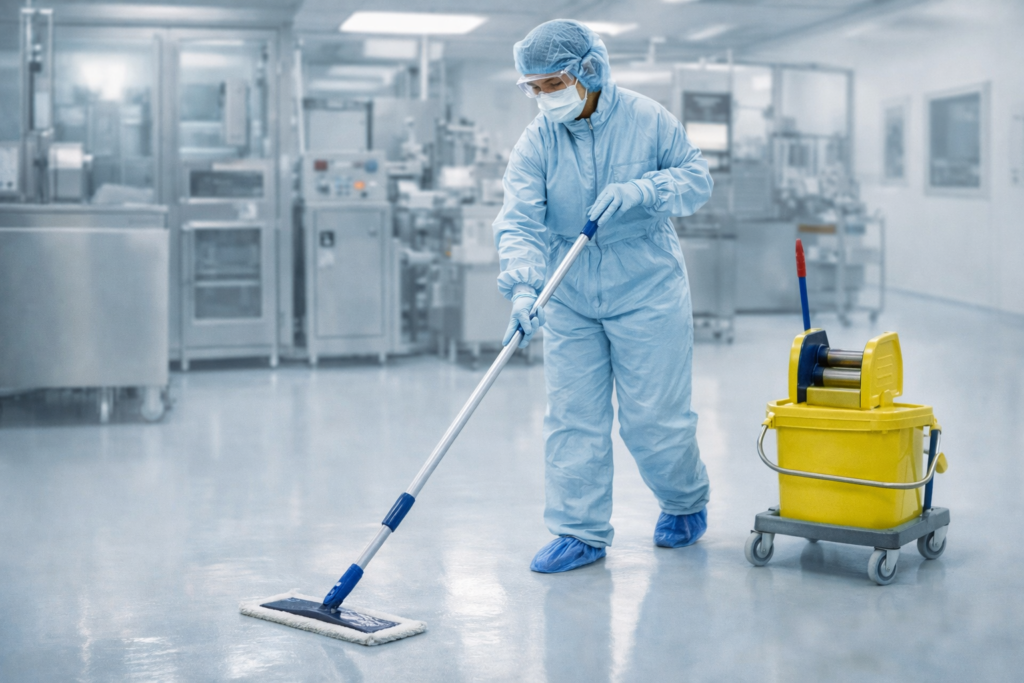
What Are Disinfectants?
Disinfectants are chemical agents used to destroy or reduce microorganisms present on inanimate objects and surfaces. Unlike sterilization, which eliminates all forms of life including spores, disinfection aims to significantly lower microbial load to acceptable levels.
Key Points for Students
- Disinfectants are applied to non‑living surfaces
- They are different from antiseptics, which are used on living tissues such as skin
- They may not kill all microorganisms, especially bacterial spores, unless they are sporicidal
Audit Perspective
From a GMP standpoint, disinfectants must be:
- Qualified for use
- Effective against target microorganisms
- Applied using validated procedures
- Supported by documentation and records
Difference Between Cleaning and Disinfection
This distinction is extremely important and frequently asked in audits.
- Cleaning removes visible dirt, residues, and organic matter using detergents and water
- Disinfection reduces microbial contamination after cleaning
Audit tip: Disinfection without proper cleaning is considered ineffective because organic matter can inactivate many disinfectants.
Types of Disinfectants
Disinfectants are classified based on their chemical nature, spectrum of activity, and application. Understanding these types is essential for both exams and real‑world pharmaceutical operations.
1. Alcohol‑Based Disinfectants
Examples: Isopropyl alcohol (IPA 70%), Ethanol 70%
Mode of Action:
- Denatures proteins
- Disrupts cell membranes
Advantages:
- Fast acting
- No residue
- Widely used for small surfaces and gloves
Limitations:
- Not effective against spores
- Flammable
- Reduced activity in presence of organic matter
2. Quaternary Ammonium Compounds (QACs)
Examples: Benzalkonium chloride
Mode of Action:
- Disrupts cell membrane permeability
Advantages:
- Good activity against Gram‑positive bacteria
- Surface‑friendly
Limitations:
- Limited activity against Gram‑negative bacteria and spores
- Can leave residues
3. Phenolic Disinfectants
Mode of Action:
- Protein denaturation and membrane damage
Advantages:
- Effective against many bacteria
Limitations:
- Not suitable for cleanrooms due to residues
- Environmental and safety concerns
4. Chlorine‑Based Disinfectants
Examples: Sodium hypochlorite
Mode of Action:
- Oxidation of cellular components
Advantages:
- Broad spectrum activity
Limitations:
- Corrosive
- Strong odor
- Residue concerns
5. Aldehydes
Examples: Formaldehyde, Glutaraldehyde
Mode of Action:
- Cross‑links proteins and nucleic acids
Advantages:
- Broad spectrum
Limitations:
- Toxic
- Occupational health concerns
- Restricted use in modern cleanrooms
6. Oxidizing Agents
Examples: Hydrogen peroxide, Peracetic acid
Mode of Action:
- Produces free radicals that damage cellular components
Advantages:
- Broad spectrum including spores
- Used in sporicidal applications
Limitations:
- Material compatibility issues
- Requires controlled handling
7. Sporicidal Disinfectants
Definition: Disinfectants capable of killing bacterial and fungal spores
Importance:
- Essential in pharmaceutical cleanrooms
- Used periodically as part of disinfectant rotation
Disinfectants in Pharmaceutical Cleanrooms
Pharmaceutical cleanrooms are controlled environments designed to minimize contamination. Disinfectants form a core part of the Contamination Control Strategy (CCS).
Why Disinfectants Are Critical in Cleanrooms
- Personnel are the largest source of contamination
- Microorganisms can survive on surfaces for long periods
- Cleanroom classification depends on microbial limits
Cleanroom Grades and Disinfection
- Grade A/B: Frequent disinfection with sterile disinfectants
- Grade C/D: Routine disinfection with periodic sporicidal application
Audit expectation: The grade of cleanroom should determine disinfectant type, frequency, and method of application.
Disinfectant Rotation in Pharmaceutical Cleanrooms
What Is Disinfectant Rotation?
Disinfectant rotation involves the planned use of different disinfectants with different modes of action to prevent microbial resistance.
Why Rotation Is Required
- Microorganisms can adapt over time
- Continuous use of one disinfectant is discouraged by regulators
Typical Rotation Strategy
- Daily disinfectant (e.g., IPA)
- Weekly or monthly alternate disinfectant
- Periodic sporicidal disinfectant
Audit tip: Rotation schedules must be written, justified, and followed.
Selection Criteria for Pharmaceutical Disinfectants
When selecting disinfectants, pharmaceutical companies consider:
- Spectrum of activity
- Cleanroom material compatibility
- Residue profile
- Safety and toxicity
- Contact time
- Regulatory acceptance
Validation and Qualification of Disinfectants
Disinfectant Efficacy Testing
- Surface challenge studies
- Use of in‑house isolates
Audit Expectations
- Evidence of disinfectant qualification
- Defined contact time
- Requalification after changes
Application Methods in Cleanrooms
- Spraying
- Wiping (preferred)
- Fogging (controlled use)
Best practice: Use unidirectional wiping to avoid cross‑contamination.
Documentation and Records
From an audit perspective, documentation is as important as the disinfectant itself.
Required documents include:
- SOPs for cleaning and disinfection
- Rotation schedules
- Preparation and dilution records
- Training records
Common Audit Observations Related to Disinfectants
- No sporicidal disinfectant in rotation
- Improper dilution practices
- Missing contact time
- Lack of disinfectant validation
Student‑Friendly Summary
- Disinfectants reduce microorganisms on surfaces
- Different disinfectants work in different ways
- Cleanrooms require planned and validated disinfection
- Rotation prevents resistance
- Documentation ensures compliance
Disinfectants in pharmaceutical cleanrooms are far more than routine cleaning agents—they are a fundamental part of contamination control and GMP compliance. For students, understanding disinfectants builds a strong foundation in applied microbiology. For professionals, proper selection, rotation, validation, and documentation of disinfectants directly impact audit outcomes and product quality.
A well‑designed disinfectant program protects not only the cleanroom environment but also the end patient, making it one of the most critical responsibilities in pharmaceutical manufacturing.
Understanding Biosafety Levels
Viable Monitoring in Cleanrooms
Microorganisms of Concern vs Objectionable Microorganisms in Pharmaceuticals